Ready to book? Call us or text us at (562) 201-3014 for a free on-site estimate, or see furnace replacement in Huntington Beach. If the system might still be repairable, start with furnace repair.
Your air conditioner just stopped working in the middle of summer, and the HVAC repair tech says your system is ‘not worth fixing’. He is suggesting that you look at a new system, and suddenly you’re staring down a major expense you didn’t plan for.
Replacing a home HVAC system is one of the biggest purchases most homeowners face. New HVAC system pricing can feel confusing, overwhelming, and downright scary. Different air conditioning contractors throw out wildly different numbers. Some quotes look suspiciously cheap. Others feel outrageously expensive.
You deserve straight answers. In this article, we’ll break down exactly what a new HVAC system costs in 2026, what affects the price, and how to spot red flags before you sign anything.
If you are planning to replace your heating and cooling system this year, here is a realistic, no-nonsense breakdown of what an HVAC System Replacement Cost in 2026 actually looks like, and how to avoid getting ripped off.
The Real Cost of a Full HVAC System in 2026
Let’s get right to the numbers. If an HVAC contractor is giving you a realistic, high-quality new HVAC system quote in 2026, you should expect a full HVAC system replacement to start between $10,000 and $11,000.
Depending on the size of your home, the efficiency rating of the unit, and the specific brand you choose, that number can easily go up. In fact, some of the most trusted and reputable professionals in the industry can’t get their prices below $15,000 to $17,000 for top-tier systems.
Why the high price tag? A full replacement isn’t just swapping out a metal box. It includes the condenser outside, the air handler inside, the refrigerant lines, electrical connections, and the intense labor required to install everything safely and in compliance with California code.
Don’t Forget the Ductwork
One of the biggest misconceptions in heating and air is that your equipment and your ductwork are the same thing. They are actually completely separate systems. You can install a brand-new, $15,000 air conditioner, but if your ductwork is leaky, torn, or undersized, that new unit will never cool your home efficiently.
If you need to replace your duct system alongside your equipment (or as a standalone project), a brand-new duct system changeout costs around $4,300 in 2026.
For that price, you shouldn’t just be getting standard materials. At Thomson AC, that covers a premium Class 1 flex duct system with R8 insulation. This high-level insulation ensures that the cold air your AC works so hard to produce actually makes it into your living room instead of leaking into your hot attic.
The Danger of “Too Good to Be True” Bids
When you start gathering quotes for your HVAC System Replacement Cost in 2026, you will likely see a wide range of numbers. While it is tempting to go with the lowest bidder, extreme prices—on both ends of the spectrum—should be a massive red flag.
Beware the Bottom-Dollar Bid
If an HVAC contractor offers to replace your entire system for significantly less than $10,000 this year, proceed with extreme caution. Equipment prices are fixed by the manufacturers. To offer a price that low, a contractor must cut corners. They might be using inferior, unbranded equipment, reusing old components that should be replaced, skipping necessary permits, or employing unlicensed, inexperienced labor. A cheap installation usually leads to thousands of dollars in premature repairs.
Watch Out for Price Gouging
On the flip side, if a quote comes back astronomically high (well over that $17,000 mark for a standard home system), you might be dealing with price gouging. Some companies bank on your desperation during a summer heatwave and inflate their prices. You shouldn’t have to spend extra money just to pad a high-pressure salesman’s commission check.
Get a Custom Framework for Your Home
While $10,000 to $17,000 for equipment and $4,300 for HVAC ductwork gives you a solid foundational framework, every single home is unique.
Want a real number for your house? Call us or text us at (562) 201-3014 for a Free Estimate. Full swap details: furnace replacement. Might still be repairable? Start with furnace repair.
Your final, exact price will depend on precise measurements, the layout of your home, your existing electrical setup, and your family’s specific comfort needs. We can’t give you a guaranteed quote to the penny until we physically inspect your property, but we promise we will always give you the honest, unvarnished truth once we do.
What Is the Typical Cost of Upgrading an Air Conditioning System?
A full HVAC system replacement in 2026 starts between $10,000 and $11,000 for a standard home installation.
That price covers the condenser unit outside, the air handler inside, refrigerant lines, electrical connections, and professional labor. Every piece of the installation has to meet the California building code.
For higher-end systems from trusted brands, expect to pay between $15,000 and $17,000. The jump in price usually comes from better efficiency ratings, longer warranties, and quieter operation.
This isn’t just swapping out a metal box. A full system replacement is a significant construction project inside your home. Quality installation matters just as much as the equipment itself.
Thomson AC provides transparent HVAC replacement quotes with no hidden fees or pressure tactics.
Which Air Conditioners Are Most Energy-Efficient and Cost-Effective?
The most energy-efficient air conditioners in 2026 carry a SEER2 rating of 16 or higher and use R-410A or the newer R-454B refrigerant.
Brands like Carrier, Lennox, Trane, and Daikin lead the pack for combining efficiency with long-term reliability. A higher SEER2 rating means lower electricity bills every single month. Over 10 to 15 years, those savings add up to thousands of dollars.
Here’s what to look for in an energy-efficient HVAC system:
- A SEER2 rating of 16 or above for meaningful energy savings
- ENERGY STAR certification from the U.S. Department of Energy
- Variable-speed compressor technology for consistent comfort
- A manufacturer warranty of at least 10 years on major components
The cheapest unit upfront isn’t always the most cost-effective in the long run. A system that costs $2,000 more but saves $40 a month on energy pays for itself in about four years.
What Is a Good Home Air Conditioner Size and Cost?
The right air conditioner size depends on your home’s square footage, and choosing the wrong size wastes money and shortens equipment life.
HVAC systems are measured in tons. One ton of cooling handles roughly 400 to 600 square feet, depending on your home’s insulation, ceiling height, and sun exposure. Here’s a general guide:
- 1.5 to 2 tons: homes under 1,200 square feet
- 2.5 to 3 tons: homes between 1,200 and 1,800 square feet
- 3.5 to 4 tons: homes between 1,800 and 2,400 square feet
- 5 tons: homes over 2,400 square feet
An oversized AC unit short-cycles. It turns on, blasts cold air, then shuts off before removing humidity. Your home feels clammy and uncomfortable. An undersized unit runs constantly and never reaches the set temperature.
A proper load calculation from a licensed HVAC technician is the only reliable way to match your home to the right system size.
How Much Does a 5-Ton Air Conditioning Unit Typically Cost?
A 5-ton air conditioning unit with full installation typically costs between $13,000 and $17,000 in 2026, depending on the brand and efficiency rating.
Five-ton systems are designed for larger homes, generally over 2,400 square feet. The equipment itself is physically larger, uses more refrigerant, and requires heavier electrical service. All of those factors push the price up compared to smaller systems.
The installation labor is more involved too. Larger condenser units need a solid pad, proper clearance, and upgraded wiring. The air handler inside takes up more space and may require ductwork modifications.
If your home truly needs a 5-ton system, don’t let a contractor talk you into a smaller unit to save a few dollars. An undersized system will cost you far more in repairs and energy bills over time.
What Are the Main Differences Between 2-Ton and 5-Ton AC Units?
The main difference is cooling capacity. A 2-ton unit handles up to 1,200 square feet, while a 5-ton unit covers 2,400 square feet or more.
Beyond square footage, the differences affect your wallet and your comfort:
- Price gap: a 2-ton system starts around $10,000 installed, while a 5-ton system starts closer to $13,000
- Energy use: a 5-ton unit draws significantly more electricity each month
- Ductwork requirements: larger systems need wider ducts to move more air efficiently
- Noise levels: 5-ton condensers are louder and need more outdoor clearance
The right choice comes down to your home’s actual cooling load. A professional load calculation removes all the guesswork and protects you from buying the wrong system.
Can You Recommend Energy-Efficient Ducted Air Conditioning Systems?
Yes. For ducted systems, the best energy-efficient options in 2026 are variable-speed or two-stage systems with a SEER2 rating above 17.
Variable-speed systems adjust their output based on your home’s real-time cooling needs. Instead of blasting at full power and shutting off, they run at lower speeds for longer periods. The result is more even temperatures, lower humidity, and quieter operation.
But here’s what most homeowners overlook. Your ductwork matters just as much as your equipment.
You can install a $15,000 high-efficiency air conditioner, but if your ducts are leaky or undersized, you’ll lose 20 to 30 percent of that cooling before it reaches your rooms. That wasted energy shows up on every electricity bill.
A brand-new duct system changeout costs around $4,300 in 2026. At Thomson AC, that covers a premium Class 1 flex duct system with R8 insulation. This level of insulation keeps cold air cold as it travels from your air handler to your vents, instead of leaking into a hot attic.
Air Conditioner Energy Consumption and Cost Management
Managing your AC’s energy consumption starts with the right equipment, proper installation, and consistent maintenance.
A high-efficiency system paired with sealed, insulated ductwork gives you the best foundation. From there, a few smart habits keep your costs in check:
- Change your air filter every 30 to 60 days during heavy use
- Schedule professional HVAC maintenance twice a year, before summer and before winter
- Use a programmable thermostat to avoid cooling an empty house
- Keep your outdoor condenser unit clear of debris, plants, and obstructions
According to the U.S. Department of Energy, heating and cooling accounts for about 35% of the average home’s energy use. Even small improvements in your HVAC system’s efficiency can lower your monthly bill noticeably.
The biggest mistake homeowners make is ignoring maintenance. A neglected HVAC system loses efficiency every year and eventually fails years earlier than it should.
How to Spot Red Flags in HVAC Quotes
When you start collecting quotes for your HVAC system replacement, you’ll see a wide range of numbers. Both extremes should raise concerns.
If a contractor offers a full system replacement for well under $10,000, something is off. Equipment prices are set by manufacturers. To hit a price that low, a contractor has to cut corners. They might use unbranded equipment, reuse old components, skip permits, or rely on unlicensed labor.
A cheap installation almost always leads to thousands in early repairs.
On the other end, if a quote comes in well above $17,000 for a standard home system, you might be dealing with price gouging. Some companies take advantage of summer heatwaves and desperate homeowners. You shouldn’t pay extra just to pad a salesman’s commission.
Get at least three quotes. Compare them line by line. Ask each contractor to explain exactly what’s included.
Get an Honest HVAC Quote From Thomson AC
Replacing your HVAC system is a big decision. The right equipment, installed correctly, keeps your home comfortable for 15 to 20 years. The wrong choice costs you in repairs, energy bills, and frustration.
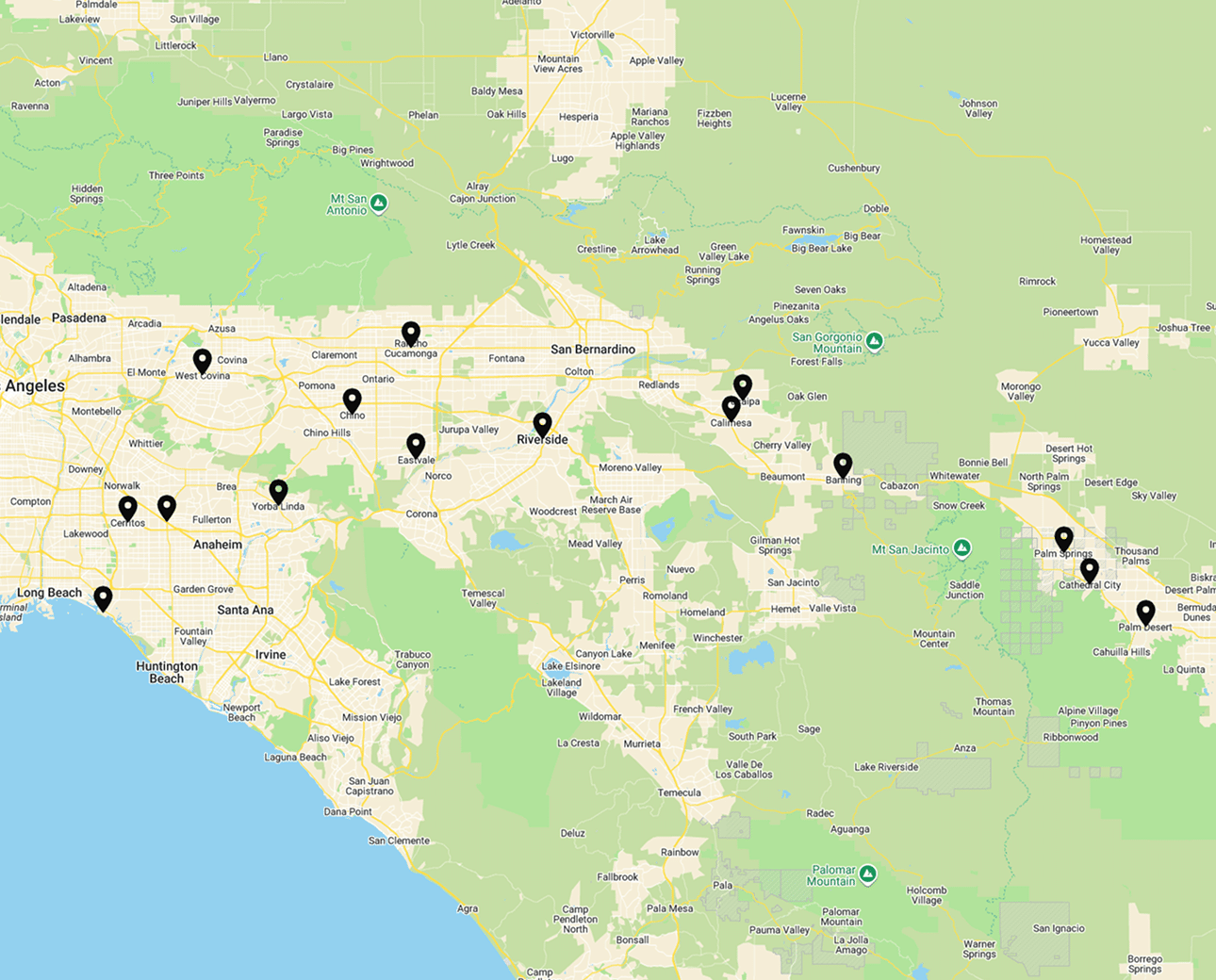
Thomson AC serves Seal Beach, Huntington Beach, and surrounding communities with honest pricing and expert installation. No pressure. No hidden fees. Just straight answers.
Whether you’re ready to replace your system today or you just have questions, the team at Thomson AC is here to help. You don’t have to hire us to get free, honest information.
Call us at (562) 201-3014 or text us, or request a Free Estimate online.
New HVAC System Cost: Common Questions
How much does a new HVAC system cost in Orange County?
It depends on system size, efficiency, duct condition, and install complexity. Use this guide for ranges, then call Thomson AC at (562) 201-3014 for a free on-site estimate for your home.
Does the price include installation?
Published ranges often separate equipment from labor. Ask for a written estimate that lists equipment, labor, permits, and any duct or electrical work so you can compare apples to apples.
Can I finance a new HVAC system?
Many homeowners use financing such as Goodleap when they qualify. Ask Thomson AC what options are available on your quote.
Should I repair or replace my HVAC system?
Age, repair frequency, comfort complaints, and efficiency all matter. A tech visit can tell you whether another repair is smart or a replacement will cost less over the next few years.
Share:


Ready for Comfort You Can Count On?
Clear. Simple. Honest.
Talk to a Real Person
No phone trees. Just a friendly team member ready to listen and get you scheduled.
We Show Up On Time
Our techs respect your schedule and your home. You’ll get a call when we’re on the way.
Honest, Expert Solutions
We explain the issue, lay out your options, and only recommend what you truly need.





Real Customers. Real Experiences.
It was time to service the fan blower unit and had a pleasant experience again working with Glenn and his trainee George. I appreciated the time Glenn took to ensure George's work met the expectations that Glenn would have performed the job to. It's not often companies have seasoned experienced employees that can share their knowledge and experience with new staff. I hope Thomson keeps Glenn around for many more years!

Over the years, we've used Thomson to do major HVAC construction, equipment replacement and service. They are always very thorough, knowledgeable, considerate and the prices are fair. They have a lot of experienced technicians on their team and communicating with the office is easy. We get our system serviced every 6 months (very important) and they actually offer a monthly payment plan for that. I didn't take off a star (because they do offer a fantastic service), but it is difficult if something breaks during the weekend. They won't respond until offices open on Monday. But they will get you in as soon as possible and the service is great.
Very honest company and great customer service. It’s been a long time since we had our AC unit inspected and after all these years it’s still good to go and ready for summer! Ethan did a great job answering all my questions. Quick, efficient and very knowledgeable. Thanks Thomson!
Ethan was great and was very helpful in helping me understand the unit. He came out the same day I called and had parts on his truck to make the repairs right then and there. Ethan was very friendly and I would recommend him and Thomson Air Conditioning to anyone in the future.
Easy Financing That Fits Your Budget.


Goodleap Offers Many Options
Easy Application
Get Started Now
The Latest

Does Your AC Need a Surge Protector? (Yes — Here’s Why)
Oct 02, 2026

Adding a Second Quilt Head Unit to Your Existing Outdoor Unit
Sep 21, 2026

Why Ductless Mini Splits Are A Smart Choice for Your ADU
Sep 17, 2026

How To Tell if Your SOCAL Home Ductwork Contains Asbestos
Sep 01, 2026
How Much Does It Cost to Replace a Furnace in Orange County in 2026?
Aug 24, 2026

Ductless Mini-Splits For Older Seal Beach Homes Without Adding Ductwork
Aug 11, 2026
Serving Huntington Beach
And Surrounding Areas