If your home was built before the mid-1980s, there is a chance your ductwork may contain asbestos.
Look for a chalky white or grey paper-like wrap around round metal ducts, corrugated cardboard-style sleeves, or hard grey cement-board ducts. You can’t confirm asbestos by eye. Only a certified lab test on a sample can. Until then, leave it alone and don’t touch it.
Here’s the facts: asbestos duct wrap sitting undisturbed is not an emergency. Damaged, crumbling, or drilled-into asbestos is a real health risk.
The danger is if there is a disturbance. In this article, we’ll walk through which homes are at risk, what asbestos ductwork looks like, what to avoid, and how to get help.
Which Southern California Homes Carry the Highest Risk
Age is the single biggest clue to whether a home has an issue with asbestos.
Asbestos was used heavily in HVAC duct insulation, pipe wrap, and cement duct board through the 1970s. Homes built or re-ducted before 1985 sit squarely in the risk window.
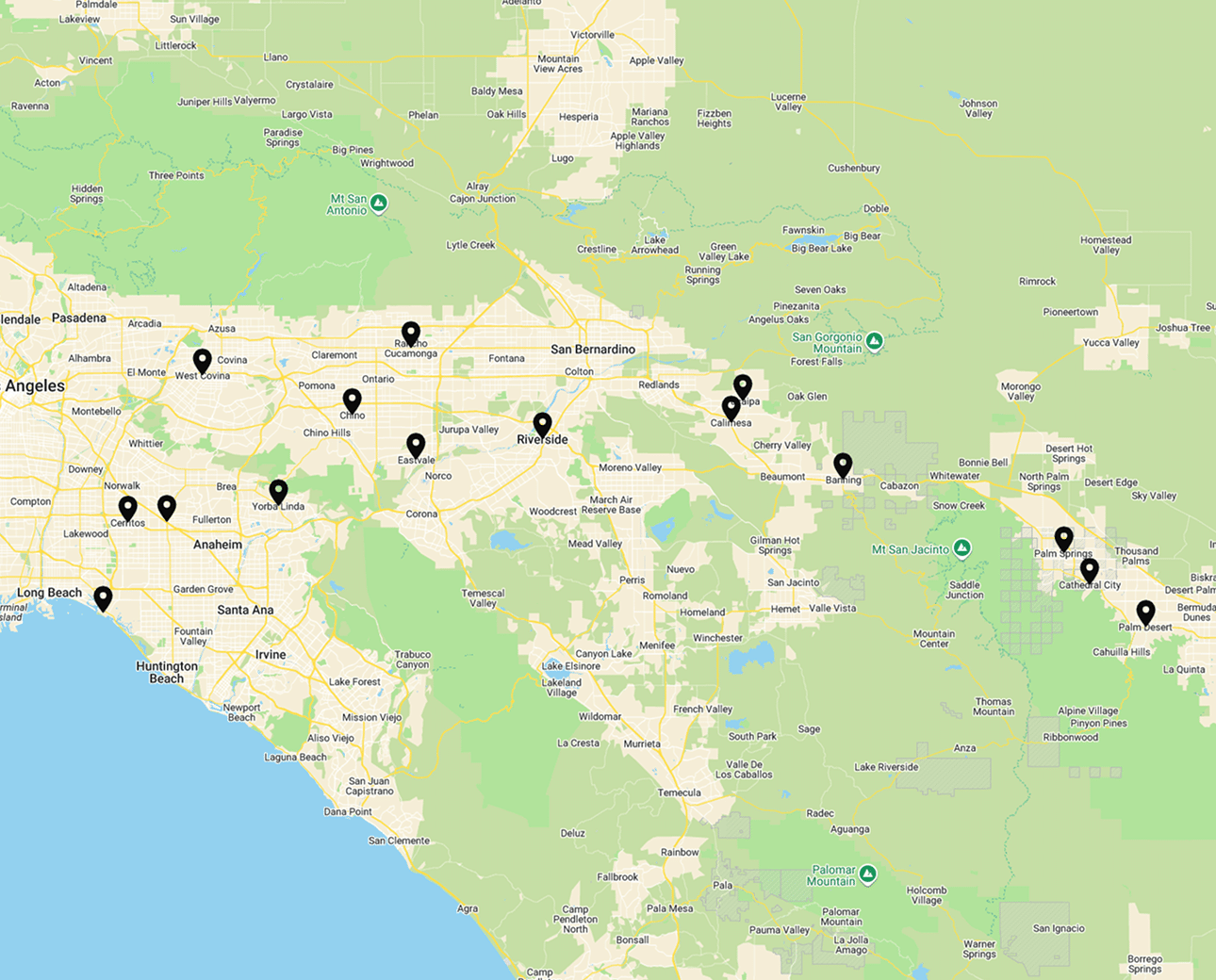
Long Beach, Seal Beach, Huntington Beach, and much of Orange County are full of that housing stock. Post-war tracts, mid-century ranch homes, and older duplexes all qualify.
The U.S. Environmental Protection Agency lists furnace insulation, duct and pipe coverings, and cement sheets among the common asbestos-containing materials still sitting in American homes today.
A 1990s or newer home is very unlikely to have asbestos ductwork. A 1955 home with original ducts almost certainly deserves a look.
What Asbestos Duct Wrap and Transite Ducts Look Like
There are three common forms you’ll actually see in a SoCal attic or crawlspace.
- Paper or tape wrap: A white, grey, or off-white paper-like material wound around round metal duct, often taped at the seams. It gets brittle and flakes with age.
- Corrugated sleeve insulation: A thick cardboard-textured sleeve, usually grey, covering the duct like a tube. It crushes easily and sheds fibers.
- Transite duct board: Hard, dense, grey cement-style panels used for underground or under-slab duct runs. It looks like grey slate and feels like concrete.
Also check the old furnace itself. Door gaskets, boiler jackets, and the plenum joints often carry the same material.
What about flexible silver ducting with fiberglass insulation? That newer material is modern and asbestos-free.
Why Disturbing Asbestos Ductwork Can Be Dangerous
Asbestos only hurts you when its fibers go airborne. That’s when people breathe them in.
The EPA links asbestos exposure to lung cancer, asbestosis, and mesothelioma, a rare cancer of the lining around the lungs and abdomen.
Ductwork makes the risk worse for one specific reason. Your duct system is a pressurized air highway that runs straight into every bedroom in your home.
If fibers get released near a leaky return, your HVAC system distributes them. That distribution turns a localized problem into a whole-house problem within minutes.
What Not To Do if You Suspect Asbestos in Your Vents
The EPA’s guidance in Protect Your Family from Exposures to Asbestos is refreshingly blunt: leave asbestos-containing material alone when it’s in good condition.
Here’s what to avoid completely:
- Don’t sweep, dust, or vacuum any debris near suspect ductwork. A household vacuum sprays fibers back into the room.
- Don’t saw, sand, scrape, or drill the duct wrap. Cutting a new vent through it is one of the worst things you can do.
- Don’t pressure-wash or scrub it, and don’t try to seal it with duct tape or spray coating yourself.
- Don’t run your HVAC system if wrap is actively crumbling near a return or air handler. Shut it off and call a professional.
Also skip the DIY removal video you found. California regulates this work for a reason.
How Asbestos Duct Testing Actually Works
Testing is fast, and it’s the only way to know.
A certified asbestos consultant takes small samples using wet methods and containment, then sends them to an accredited lab. Results typically come back in two to five business days.
Expect roughly $400 to $900 for a residential survey in the Long Beach and Orange County area. Rush lab work costs more.
California sets clear rules here. Cal/OSHA requires certification for consultants sampling or overseeing removal projects of 100 square feet or more, and registration for contractors removing material above 0.1% asbestos content.
One important note from the EPA: avoid a conflict of interest. The company assessing your ductwork ideally shouldn’t be the same company selling you the removal.
Your Asbestos Duct Abatement and Replacement Options
Once testing confirms asbestos, you have two legitimate paths.
Encapsulation seals intact wrap in place with a specialized coating. It’s cheaper and works when the material is undamaged and the ducts are staying put.
Full abatement and duct replacement removes the asbestos-containing system entirely. Then a clean, sealed, modern duct system goes in.
Most Southern California homeowners with 60-year-old ducts choose replacement. Old ducts are usually leaking badly and undersized anyway, so you gain efficiency and safety in one project.
Proper abatement involves containment barriers, negative air pressure machines, HEPA-filtered vacuums, damp wiping, sealed disposal, and a post-abatement clearance inspection.
Permitting matters too. South Coast AQMD Rule 1403 requires an asbestos survey signed by a consultant before demolition or renovation, plus notification 10 working days ahead for covered projects.
At Thomson Air Conditioning, our team handles asbestos duct abatement, removal, and replacement for homes across Long Beach and Orange County. Budget roughly $3,000 to $9,000 for abatement plus new residential ductwork, depending on home size and access.
Frequently Asked Questions About Asbestos in Ductwork
Can I tell if my ducts have asbestos just by looking?
No. Visual clues like grey paper wrap or hard cement duct board raise suspicion, but only accredited lab testing confirms asbestos.
Is asbestos in my vents dangerous if I don’t touch it?
Intact, undamaged asbestos duct material that stays undisturbed generally doesn’t release fibers. Damage, vibration, and renovation work are what create exposure risk.
What year did homes stop using asbestos ductwork?
Asbestos duct insulation was common through the 1970s and faded through the early 1980s. Treat any home built before 1985 as a candidate for testing.
How much does asbestos duct removal cost in Southern California?
Testing typically runs $400 to $900. Full abatement with new ductwork commonly falls between $3,000 and $9,000, based on square footage and crawlspace access.
Can I remove asbestos duct wrap myself in California?
Doing so is a bad idea and heavily restricted. Cal/OSHA requires registered contractors for removals of 100 square feet or more, and South Coast AQMD requires surveys and notifications.
Get Your Older Ductwork Checked With Confidence
Asbestos inside ductwork isn’t something to panic about. It’s something to identify, contain, and handle correctly.
Leave suspect material undisturbed, get it tested, then let certified professionals do the removal. Your family keeps breathing clean air, and your HVAC system finally runs the way it should.
Thomson Air Conditioning has served Seal Beach, Huntington Beach, Long Beach, and Orange County homeowners for decades. Call (562) 201-3014 or visit the Thomson Air Conditioning contact page to book your duct assessment.
Share:


Ready for Comfort You Can Count On?
Clear. Simple. Honest.
Talk to a Real Person
No phone trees. Just a friendly team member ready to listen and get you scheduled.
We Show Up On Time
Our techs respect your schedule and your home. You’ll get a call when we’re on the way.
Honest, Expert Solutions
We explain the issue, lay out your options, and only recommend what you truly need.





Real Customers. Real Experiences.
It was time to service the fan blower unit and had a pleasant experience again working with Glenn and his trainee George. I appreciated the time Glenn took to ensure George's work met the expectations that Glenn would have performed the job to. It's not often companies have seasoned experienced employees that can share their knowledge and experience with new staff. I hope Thomson keeps Glenn around for many more years!

Over the years, we've used Thomson to do major HVAC construction, equipment replacement and service. They are always very thorough, knowledgeable, considerate and the prices are fair. They have a lot of experienced technicians on their team and communicating with the office is easy. We get our system serviced every 6 months (very important) and they actually offer a monthly payment plan for that. I didn't take off a star (because they do offer a fantastic service), but it is difficult if something breaks during the weekend. They won't respond until offices open on Monday. But they will get you in as soon as possible and the service is great.
Very honest company and great customer service. It’s been a long time since we had our AC unit inspected and after all these years it’s still good to go and ready for summer! Ethan did a great job answering all my questions. Quick, efficient and very knowledgeable. Thanks Thomson!
Ethan was great and was very helpful in helping me understand the unit. He came out the same day I called and had parts on his truck to make the repairs right then and there. Ethan was very friendly and I would recommend him and Thomson Air Conditioning to anyone in the future.
Easy Financing That Fits Your Budget.


Goodleap Offers Many Options
Easy Application
Get Started Now
The Latest

How To Tell if Your SOCAL Home Ductwork Contains Asbestos
Sep 01, 2026

How Much Does It Cost to Replace a Furnace in Orange County in 2026?
Aug 24, 2026
Ductless Mini-Splits For Older Seal Beach Homes Without Adding Ductwork
Aug 11, 2026
A Guide to Air Conditioning Repair in Fountain Valley
Aug 03, 2026
Is Your Smart Thermostat Actually Costing You Money?
Jul 21, 2026

Air Conditioning Maintenance in Newport Beach: Stay Cool All Summer
Jul 15, 2026
Serving Huntington Beach
And Surrounding Areas