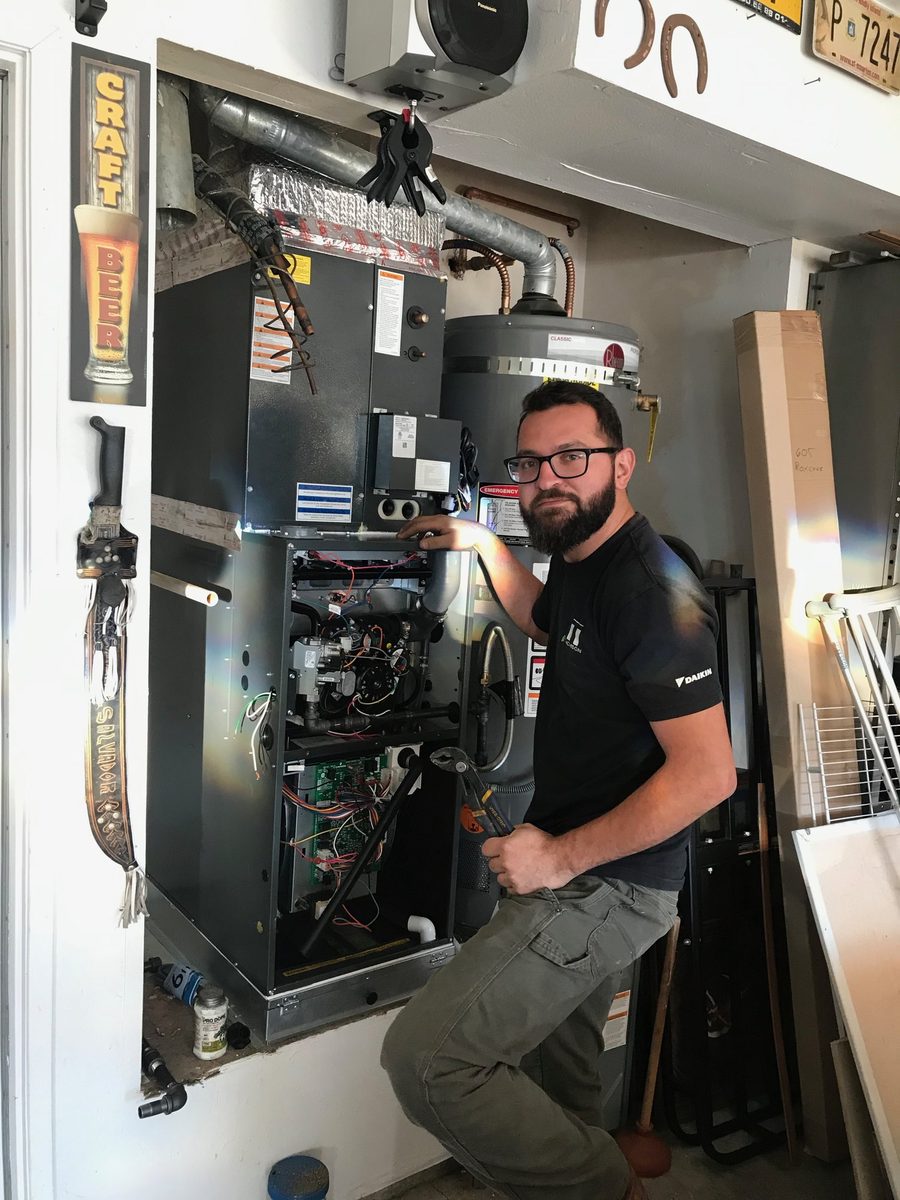
Posts Tagged: HVAC installation

A Smart Guide to Air Conditioning Installation in Seal Beach

Your air conditioner in Seal Beach has worked hard for years. Now it feels like it’s limping through summer. It feels hotter inside than outside. Your energy bills climb every month. Your AC unit cycles on and off without cooling much.

Maybe an HVAC tech told you the compressor is already shot. Or the refrigerant is leaking faster than they can recharge it.

At some point, the math no longer works to continue doing AC repairs. When you are considering the cost of a new AC installation, the choices can feel confusing.

Which size AC unit? Which AC unit brand? Which efficiency rating?

Many homeowners get stuck in decision fatigue and end up waiting, figuring they can suffer through one more summer with a failing system.

The cost of waiting for an AC replacement adds up fast. The U.S. Department of Energy confirms that older AC units use 30 to 50% more energy than modern high-efficiency systems.

In this article, we’ll cover everything you need to know about air conditioning installation in Seal Beach. We’ll explain how to size your system, what costs to expect, and how to find local help.

What Drives AC Installation Decisions in Seal Beach

Seal Beach homes have specific cooling needs. Coastal homes near Main Street and the Pacific Coast Highway enjoy mild summers most years, while inland areas like College Park East and The Hill see hotter peaks. That climate variety changes which AC system fits your home best.

New federal regulations also shape your options. The Department of Energy confirms all new central AC units sold after January 2023 must meet SEER2 efficiency standards, so older SEER ratings no longer apply. For Seal Beach homes, the minimum SEER2 rating is 14.3, though higher-efficiency units offer 16, 18, or even 22. The higher the rating, the lower your monthly bill.

Common AC installation choices include:

  • Central split systems for whole-home cooling
  • Heat pumps that provide both cooling and heating
  • Ductless mini-splits for additions, garages, or zoned rooms
  • High-efficiency variable-speed units for maximum savings

Sizing matters more than most homeowners realize. An oversized unit cycles on and off, wears out faster, and creates humidity problems, while an undersized unit runs constantly without ever keeping up. That is why pros use a Manual J calculation to size your system, factoring in square footage, insulation, windows, ceiling height, and sun exposure. A 1,500-square-foot home in Seal Beach typically needs a 2- to 3-ton system.

Federal tax credits can also affect the decision. The Inflation Reduction Act offers up to $2,000 in tax credits for high-efficiency heat pump installations through 2032.

One myth costs Seal Beach homeowners thousands: the belief that bigger AC units cool better. They do not. Right-sized units always outperform oversized ones for comfort, efficiency, and lifespan.

How to Plan Your AC Installation


A smooth AC installation in Seal Beach starts with the right contractor. Begin with a free in-home consultation, where a pro will inspect your existing ductwork, measure your rooms, and check your electrical panel before recommending equipment based on your home’s specs and your budget.

Look for these signs of quality:

  • California C-20 HVAC license from the state board
  • Manual J load calculation for proper sizing
  • Written estimates with brand, model, and SEER2 rating listed
  • NATE-certified installers trained on current codes
  • Manufacturer warranties on parts and labor

Installation costs in Seal Beach vary by system. Standard central AC installations average $5,500 to $9,500, while high-efficiency systems run $8,000 to $13,000. Heat pump installations cost $7,000 to $15,000, and ductless mini-split systems start around $4,500 for single zones.

The full process usually takes one to three days. The crew removes the old equipment, installs the new components, runs new refrigerant lines, and tests the system before they leave.

Permits matter too. The City of Seal Beach requires HVAC permits for all installations, and quality contractors handle that paperwork for you. Skip the permit, and you will run into problems when you sell your home later.

Thomson AC handles air conditioning installation across Seal Beach, Old Town, College Park East, and Bridgeport. Visit our Seal Beach services page to see our full coverage area. Our team installs Carrier, Trane, Lennox, and other top brands, and we pull permits, handle inspections, and back our work with strong warranties.

We also offer financing options, and most Seal Beach homeowners qualify for low monthly payments on a new system. Some equipment even includes special manufacturer rebates and tax credits.

After installation, our maintenance plans keep your new system running at peak efficiency. Plan members enjoy yearly tune-ups, priority scheduling, and lower long-term costs.

Timing your installation matters in Seal Beach as well. Spring and fall offer the best scheduling and the cleanest install conditions. Summer installs still happen fast, but contractor calendars fill quickly with repair calls.

The EPA confirms that high-efficiency AC systems can cut cooling costs by up to 20% compared to older units. On a typical Seal Beach home, that adds up to $300 or more in yearly savings.

Smart-thermostat integration adds even more value. Modern systems pair with Wi-Fi thermostats that learn your schedule and adjust cooling on their own, which protects your investment and lowers your monthly bills at the same time.

Get a New AC System Built for Seal Beach

Air conditioning installation in Seal Beach comes down to the right contractor, the right size, and the right system. New systems deliver real savings: lower bills, better comfort, and fewer breakdowns, and modern equipment lasts longer and runs cleaner than older units.

Thomson AC handles AC installations throughout Seal Beach, and our certified team handles sizing, equipment selection, permits, and the full installation. Stop fighting an old AC system that cannot keep up.

Call (562) 373-2386 to schedule your free consultation. You can also visit our contact page for an online quote. Your new comfort starts here.

How to Choose Reliable HVAC Service in Huntington Beach

Your home in Huntington Beach should feel like a coastal retreat. Cool, calm, and comfortable.


But when summer hits, and the marine layer burns off by 11am, the Indoor temps climb past 80 degrees.

Your AC unit hums away, but the airflow feels weak. Rooms upstairs stay warm even with the system running.

Sound familiar?

When Your Coastal Comfort Slips Away


The problem usually points to one thing. Your HVAC system in Huntington Beach can’t keep up with the unique demands of coastal Orange County living.

Salt air accelerates corrosion on outdoor condenser coils. Marine humidity strains evaporator components.

Old AC units lose efficiency every year they run without service.

Many homeowners chase quick fixes. They call the cheapest contractor or skip seasonal tune-ups.

The result? Higher bills, repeat breakdowns, and shorter equipment life.

In this article, we’ll explore how to choose dependable HVAC service in Huntington Beach. You’ll see what matters in a contractor, and how Thomson AC can help if you need a hand.

Why Huntington Beach Homes Demand Specialized HVAC Care

Huntington Beach sits on the Pacific Coast. Salt air drifts inland from Sunset Beach and Bolsa Chica every day.

That coastal exposure changes everything for your HVAC unit.

According to the U.S. Department of Energy, coastal HVAC equipment corrodes 2 to 5 times fasterthan inland systems. Sea salt eats through aluminum fins and copper tubing.

Add the daily marine layer. Morning humidity often exceeds 80% in Huntington Harbour and Edinger neighborhoods.

That moisture overworks AC compressors and shortens system lifespan.

The local climate also creates wide temperature swings. Coastal mornings hit 55 degrees. Inland Goldenwest afternoons can climb to 90.

Your HVAC system runs through every weather pattern Southern California sends.

Without coastal-specific care, your equipment fails 5 to 10 years sooner than the national average.

Per ENERGY STAR, the average HVAC unit lasts 15 to 20 years. In Huntington Beach? Expect 10 to 15 years without proper care.

Common myths cost homeowners thousands. Two big ones to skip:

  • “Newer units don’t need maintenance.” False. Even new systems lose efficiency without yearly tune-ups.
  • “All HVAC contractors are the same.” False. Coastal HVAC requires specific training and parts knowledge.

The right contractor saves you money long term. The wrong one costs you your equipment.

How to Choose the Right HVAC Service Provider

Choosing reliable HVAC service in Huntington Beach takes a few smart steps.

Start with the basics. Verify the contractor holds a current California C-20 HVAC license. Check it through the California Contractors State License Board.

Next, ask about coastal experience. Any local pro should know how salt air affects condenser coils.

They should recommend protective coatings or stainless steel hardware.

Look for these signs of a quality HVAC company:

  • NATE-certified technicians trained on modern systems
  • Written estimates before any work begins
  • Local references from Huntington Beach customers
  • Year-round service availability for emergencies
  • Manufacturer-approved parts instead of generic substitutes

Pricing matters too. Most homeowners spend $150 to $450 on annual HVAC maintenance.

Repairs run $200 to $1,500 depending on the issue. New system installations average $5,000 to $12,000 in coastal Orange County.

HVAC service plans are the smart middle ground.

A typical plan includes two yearly tune-ups, priority emergency response, and a 10 to 15% repair discount.

The HVAC maintenance plan pays for itself with one avoided breakdown.

Indoor air quality also matters in coastal homes.

Salt and sand particles enter through windows and doors. Standard filters miss the smallest particles.

A pleated MERV 11 filter or HEPA-grade air cleaner makes a big difference for allergy-prone families.

Quality contractors should offer indoor air quality assessments alongside HVAC service.

Skipping maintenance feels like savings at first. The U.S. Bureau of Labor Statisticsconfirms HVAC failures spike when units skip annual service.

One missed tune-up can lead to a $2,000 compressor replacement.

Thomson AC offers full coverage for Huntington Beach homes. Visit our residential HVAC services pageto see what we cover.

We carry parts for every major brand. Our technicians know how to spot coastal corrosion early.

That saves you money on premature replacements.

We also offer maintenance plans. Customers on these plans see fewer breakdowns and longer system life.

Most repairs get scheduled within 24 hours. Emergency calls in Huntington Beach get same-day attention when possible.

A solid maintenance visit covers the basics most homeowners skip.

The technician cleans condenser coils, checks refrigerant pressure, tests electrical connections, and lubricates motor bearings.

They also test airflow at every register and inspect the condensate drain for clogs.

Each step adds months or years to your system life.

The EPA confirms that proper HVAC care keeps efficiency near 95% of the original rating throughout the life of the unit.

Skip maintenance, and that drops to 70% efficiency or lower within 5 years.

That gap shows up in your monthly bill every single month.

Get Huntington Beach HVAC Help When You Need It

Reliable HVAC service in Huntington Beach comes down to three things.

The right contractor, regular maintenance, and quick action when problems start.

Coastal homes face conditions inland HVAC units never see. Salt air, marine humidity, and wide temperature swings stress your system.

The fix? Work with a contractor who understands the local environment. Schedule yearly tune-ups. Address small issues before they grow.

Thomson AC handles HVAC service across Huntington Beach, Sunset Beach, and Huntington Harbour.

Our technicians know the area, the climate, and what your system needs.

Call (562) 373-2386 to schedule service today. Or visit our contact page to book online. Your comfort matters, and we’re ready to help.

How Much Does It Cost to Replace Your Heater? (2026 Price Guide)

Quick Answer: 2026 Heater Replacement Cost

Most homeowners can expect to pay $3,000 to $12,000 to replace a heater in 2026. A basic gas furnace runs $3,000 to $6,000 installed. A heat pump runs $4,500 to $8,000. High-efficiency systems that need new ductwork or electrical work reach $8,000 to $12,000 or more.

Why Heater Replacement Cost Matters

When your home heating system dies in the middle of winter, you’re not only worried about staying warm. You’re worried about a bunch of other issues that pop up when buying a new heating system.

Before we dive into home heating or furnace replacement cost, it’s good to know the main concerns and worries that people have. Understanding these helps you make a more informed decision and potentially reduce overall cost.

Common Concerns Homeowners Have About Heater Replacement Cost

Some of the most common concerns when looking at heater replacement costs are:

  • Sticker shock: the cost of replacing a home heating system feels car-sized and unexpected.
  • Pressure/timing: when your heating breaks in the winter, there is pressure to decide fast and the risk of getting price gouged.
  • Distrust of the quote: “is this quote too high?” Should you get a second bid without revealing the first?
  • Hidden costs: do you need new ductwork, to replace the electrical panel, or extra permits? The home heating install, not the equipment, is what often moves the price.
  • Rebate confusion: it feels like nobody’s sure what they actually qualify for, and how to apply for rebates.
  • Benchmarking anxiety: “how much did other people pay?” You want real heater replacement cost numbers from real people, not a contractor’s range.
  • Repair vs replace uncertainty: getting stuck in heat-pump-vs-furnace decision paralysis.

If your home heating system is aging and you’re not sure if it will make it through another winter, you want to know: What will a replacement actually cost?

The honest answer is it depends on a bunch of factors. Labor for installation, energy efficiency standards, and deciding between the different types of heating system.

In this article, we’ll walk you through the heater replacement cost variables so you can make an informed decision.

Equipment Costs: What the Heater Itself Runs

A furnace (gas heater) costs between $2,000 and $5,500 for the unit alone. Heat pumps run $2,500 to $6,000. Premium models with high AFUE ratings cost more.

AFUE stands for Annual Fuel Utilization Efficiency. According to the U.S. Department of Energy, a higher AFUE rating means more heat from the same fuel. A 95% AFUE furnace costs more than an 80% model, but it saves money over 15 to 20 years.

In Southern California, heat pumps are increasingly popular. They provide heating and cooling in one system. Upfront cost is higher, but one system does double duty.

Brand matters too. Lennox, Carrier, and Trane systems cost more than budget brands but hold value and reliability. See our furnace replacement options for current equipment.

New Heater Installation Cost in 2026


Installation cost for home heating is the part most homeowners underestimate. The unit price is only half the picture.

A standard furnace installation in Southern California runs $3,000 to $6,000 all in. That covers the equipment, labor, removal of the old unit, and basic testing.

A new gas heater installation with a high-efficiency furnace runs $5,000 to $8,500. The jump comes from the better equipment and the venting it requires.

Wall heater and floor heater installs cost far less. Most fall between $1,500 and $3,500 installed, which suits smaller or older Seal Beach homes.

Your final installation cost depends on three things: the equipment you pick, your existing ductwork, and any electrical or gas line work the job needs.

HVAC Installation and Labor: The Hidden Cost

When it comes to HVAC installation cost, the labor runs $800 to $2,500 depending on complexity. Simple swaps cost less. Major ductwork changes or relocations cost more.

If your home needs new ductwork, add $1,000 to $5,000. Electrical upgrades or gas line work push costs higher again.

Pro contractors charge for inspection, equipment removal, disposal, and testing. Read every line item before you sign.

Emergency or rush service on nights, weekends, and holidays adds 50% or more to labor. Plan ahead when you can.

2026 Heater Replacement Cost by System Type

Use this table to compare installed costs across the most common heating systems for Seal Beach and Huntington Beach homes.

System TypeEquipment OnlyInstalled Total (2026)Best For
Gas furnace (80% AFUE)$2,000 to $3,500$3,000 to $6,000Budget swaps with an existing gas line
Gas furnace (95%+ AFUE)$3,500 to $5,500$5,000 to $8,500Long-term efficiency and lower gas bills
Heat pump (standard)$2,500 to $4,500$4,500 to $8,000Homes wanting heating and cooling in one
Heat pump (high-efficiency)$4,500 to $6,000$7,000 to $12,000Maximum efficiency and rebate eligibility
Wall or floor heater$600 to $1,500$1,500 to $3,500Small or older homes, single-room heating
Ductwork add or replacen/a+$1,000 to $5,000Homes with damaged or missing ducts
2026 market pricing for the Seal Beach and Huntington Beach area. Final cost depends on equipment, ductwork, and site conditions.

Real-World Replacement Price Ranges

A basic modern furnace replacement in Southern California runs $3,000 to $6,000 total. That covers equipment plus standard installation.

A mid-range heat pump replacement runs $4,500 to $8,000 total. It costs more upfront, but energy savings pay dividends. Energy efficient systems and specifically electric furnaces can be a great option for saving money over the long-term.

Premium or complex AC replacement jobs run $8,000 to $12,000 or more. That includes high-efficiency equipment, ductwork, electrical work, or custom installs.

Repair or Replace: Which Makes Sense?


Not every heater needs replacing. The right call comes down to age, repair cost, and reliability.

Repair makes sense when your unit is under 10 years old and the fix costs less than $500. Most heater repairs land between $150 and $800.

Replace when the repair tops half the cost of a new system, or when the unit is 15 years or older. A cracked heat exchanger alone can run $1,000 or more.

Repeated breakdowns are the clearest signal. Two or more service calls in a season usually means a replacement saves money long term.

Ways to Lower Your Replacement Cost

Rebates and incentives. The U.S. Department of Energy confirms heat pumps can qualify for up to $2,000 in federal tax credits through the Inflation Reduction Act. California utilities and TECH Clean California add local rebates on top.

Timing. Replace during spring or fall, not winter. Contractors have more availability and lower service-call premiums.

Keep existing ductwork. If your current ducts are in good shape, reusing them cuts costs significantly.

Compare quotes. Get three estimates from licensed contractors. Pricing varies with equipment choice and installation scope.

Getting an Accurate Quote for Your Home

The only way to know your exact cost is a professional inspection and quote. An experienced contractor evaluates your current system, ductwork, electrical setup, and heating service needs.

They recommend equipment that matches your budget and comfort goals. They itemize labor and materials so you see where the money goes.

Thomson Air Conditioning provides transparent quotes with no surprises. We discuss equipment options, explain the ROI of higher-efficiency models, and outline what installation includes.

Call us at (562) 373-2386 or visit our contact page to request a free estimate. We serve Seal Beach and Huntington Beach.

Frequently Asked Questions About Heater Replacement Cost

How much does it cost to replace a heater in 2026?

Most heater replacements run $3,000 to $12,000 installed. A basic gas furnace costs $3,000 to $6,000. A heat pump costs $4,500 to $8,000. High-efficiency systems with ductwork reach $8,000 to $12,000 or more.

How much is a new heater for a house?

Equipment alone runs $2,000 to $6,000 depending on type. Installed, a whole-house heater costs $3,000 to $8,500 for most Southern California homes.

What is the average cost to replace a furnace in California?

A mid-range furnace replacement in California averages $4,500 to $8,000 installed. High-efficiency models and added ductwork push the total higher.

How much does it cost to install a gas heater?

A gas furnace runs $3,000 to $6,000 installed. A wall-mounted gas heater costs $1,500 to $3,500 installed.

How much does a wall heater cost to install?

Wall and floor heater installs run $1,500 to $3,500 installed. They suit smaller or older homes that heat one area at a time.

How much does it cost to fix a heater?

Most heater repairs cost $150 to $800. Major repairs like a cracked heat exchanger can run $1,000 or more.

Should I repair or replace my heater?

Repair if the unit is under 10 years old and the fix costs less than $500. Replace if the repair tops half the cost of a new system or the unit is 15 years or older.

Do heat pumps qualify for rebates in California?

Yes. Heat pumps can qualify for up to $2,000 in federal tax credits, plus California utility and TECH Clean California rebates.

How Much Does AC Replacement Cost in Huntington Beach? Real Numbers for 2026

Your AC just stopped cooling. You called an AC repair tech, who says the compressor is dead, the refrigerant lines are corroded, and your system is fifteen years old. He suggests it it might be easier to and less expensive to replace.

So you ask: “How much is this going to cost?”

Most homeowners walk into AC replacement with no real benchmark. You hear quotes ranging from $5,000 to $18,000 from different contractors. None of them explains why.

That price gap isn’t random. It comes from real differences in equipment, the scope of installation, and what’s already in your home. In this article, we’ll break down what AC replacement actually costs in Huntington Beach in 2026, what drives the price, and how to make sure you don’t overpay.

What AC Replacement Costs in 2026

In the Huntington Beach market, full AC replacement for a single-family home runs $7,000 to $14,000 in 2026. Most homeowners land in the $9,000 to $11,000 range.

That’s a wide spread. Here’s what you get at each end.

Entry tier ($7,000 to $8,500): A 14 SEER2 single-stage system from a budget brand. Reliable, but limited efficiency and a 5 to 10-year warranty. Fine for smaller homes or rental properties.

Mid tier ($9,000 to $11,500): A 16 to 17 SEER2 two-stage system from a name-brand maker (Carrier, Trane, Lennox, Daikin). Quieter, more efficient, and warrantied 10 years on parts.

Premium tier ($12,000 to $14,000+): An 18 to 20+ SEER2 variable-speed system. Best comfort, lowest energy bills, longest warranty. Worth it for larger homes or homeowners staying 10+ years.

Heat pumps cost about 10% more upfront but qualify for federal tax credits up to $2,000 under the Inflation Reduction Act. They handle both heating and cooling, which can replace an aging furnace at the same time.

What’s Actually Driving the Price of an HVAC System

The unit itself is only about 50% of your final invoice. The rest is installation and what’s specific to your home.

Here’s where the dollars go:

  • Equipment. The condenser, air handler or coil, and refrigerant lines.
  • Labor. Two technicians, one day on most jobs.
  • Permits and inspection. California requires permitted HVAC work. Most contractors include this in the quote.
  • Refrigerant. Newer systems use R-454B. Charging the system is part of the cost.
  • Disposal. Hauling away the old unit and recycling refrigerant.
  • Ductwork repairs. If your existing ducts leak or are undersized, fixing them adds $1,500 to $4,000.
  • Electrical upgrades. Older homes sometimes need a new breaker or whip. Add $200 to $600.

The big variables are ductwork and electrical. A straightforward swap with healthy ducts comes in lower. A home with original 1970s ductwork needs more work, and the quote reflects that.

Why HVAC Replacement CostS HaVE Climbed

If you replaced your AC five years ago, today’s prices feel high. There’s a reason.

The U.S. Department of Energy raised minimum efficiency standards twice since 2023, pushing manufacturers to redesign equipment. New refrigerants like R-454B replaced the older R-410A, adding cost to every system.

Labor costs are up about 12% across the trades since 2022, per the Bureau of Labor Statistics. HVAC technicians are in short supply, and that pricing pressure flows to homeowners.

The good news is the new systems are dramatically more efficient. A 2026 mid-tier AC uses 30 to 40% less electricity than the equivalent 2015 system. Over 15 years, that gap covers a meaningful portion of the upfront cost.

How to Avoid Overpaying

The biggest mistake homeowners make is treating AC replacement like buying a refrigerator. It’s not. The system is custom-fit to your house.

Here’s how to keep the quote honest.

Get three written estimates. Anyone refusing to put numbers in writing isn’t worth your time.

Confirm the SEER2 rating, brand, model, and warranty in writing. Verbal promises don’t hold up after the install.

Ask what’s included. Permits, disposal, refrigerant, and a startup test should all be standard. If they’re not, the headline price is misleading.

Ask about rebates. Southern California Edison and SoCalGas both offer HVAC rebates that can knock $500 to $2,500 off a qualifying system. A good contractor knows which ones apply to your install.

Skip cash-only deals and same-day pressure. Real contractors give you time to think. Anyone pushing you to sign on the spot is hiding something.

When Replacement Beats Repair

A repair-or-replace decision usually comes down to one number. If the repair quote is more than half the cost of a new system and the unit is over 10 years old, replacement wins.

The ENERGY STAR rule of thumb says: multiply the repair cost by the system’s age in years. If the result is over $5,000, replace.

There’s also the efficiency angle. A 12-year-old AC running at 13 SEER costs about $400 more per year to operate than a new 17 SEER2 unit. That’s $4,000 over the next decade, before you factor in repair bills.

Our team can run that math with you on a free in-home quote. We’ll show you the actual numbers for your specific system, not a generic chart.

Get a Real Quote, Not a Guess


The only way to know your exact AC replacement cost is with a professional in-home assessment.

That way you are not missing the variables that matter most: ductwork condition, electrical capacity, and how your home’s layout affects the right system size.

If you’re in Huntington Beach, Seal Beach, or the surrounding Orange County area, Thomson Air Conditioning has installed thousands of systems in homes like yours. We give straight quotes with no surprise charges, walk you through every line item, and stand behind every install.

Call (562) 373-2386 or visit our contact page for a free Huntington Beach AC replacement quote. You’ll get a clear number, a transparent breakdown, and zero pressure to decide on the spot.

4 Quality of Life & Efficiency Benefits of Professional HVAC Installation

In the search for a comfortable home environment, the significance of a professionally installed HVAC system cannot be overstated. Thomson AC, a leader in HVAC installation in La Quinta and Palm Desert, CA, brings forth unmatched expertise to enhance not just the quality of life within your home but also its efficiency and safety. This article delves into the top four benefits of entrusting your HVAC installation to professionals, highlighting how we ensure efficient performance, safety, improved air quality, and energy savings, thereby underlining the profound impact of professional installation on both your living space and the environment.

Efficient Performance and Enhanced Durability

When it comes to HVAC installation in La Quinta, CA, the expertise offered by Thomson AC guarantees an improvement in your home’s heating and cooling efficiency and also an extension of the lifespan of your HVAC system. A professional installation makes sure that your unit is perfectly matched to the needs of your home, considering size, layout, and even your local climate. This precise fitment:

  • Maximizes energy efficiency: A well-installed HVAC system operates more efficiently, significantly reducing energy consumption and lowering utility bills.
  • Extends system longevity: With correct installation minimizing wear and tear, the lifespan of your HVAC unit is significantly prolonged, postponing the need for costly replacements.

Moreover, our professionals guarantee that when you search for “HVAC installation near me” and choose us, every installation is executed with meticulous attention to detail, adhering to the highest industry standards. This commitment optimizes your system’s performance and maintains its efficiency over time, providing you with a comfortable and cost-effective home environment year-round.

Assurance of Safety and Compliance

The installation of an HVAC system involves intricate electrical work, handling of refrigerants, and ensuring proper ventilation—all aspects that, if not correctly managed, could pose significant safety risks. Our team prioritizes your safety by:

  • Ensuring compliance with local and federal regulations: Our technicians are well-versed in the specific codes and standards for HVAC installation in Palm Desert, CA, ensuring every system meets or exceeds legal requirements.
  • Mitigating risks of electrical hazards and leaks: With professional installation, the risks associated with improper electrical connections or refrigerant leaks are significantly reduced, safeguarding your property and your family.

By choosing Thomson AC when searching for “HVAC installation near me,” you’re not just investing in service; you’re ensuring peace of mind, knowing that your installation is executed safely and to the highest standards of quality and compliance.

Enhanced Indoor Air Quality

One of the less obvious but equally important benefits of a professionally installed HVAC system is the improvement of your home’s indoor air quality. Proper installation and ventilation not only optimize temperature control but also significantly reduce pollutants, allergens, and humidity levels within your home. This results in:

  • Healthier living environment: Our experts ensure that a professionally installed system reduces the circulation of dust, pollen, and other airborne irritants, helping to ease symptoms for individuals with allergies or respiratory issues.
  • Improved comfort and well-being: Maintaining optimal humidity levels enhances comfort, prevents mold growth, and ensures a healthier indoor atmosphere for you and your family.

Energy Savings and Environmental Impact

Investing in a professional HVAC installation by Thomson AC benefits your comfort, and safety, and contributes to broader environmental efforts. By optimizing the efficiency of your HVAC system, we help reduce the overall energy consumption of your home, which in turn:

  • Lowers your carbon footprint: A well-functioning HVAC system uses less energy for heating or cooling your home, consequently lowering your home’s greenhouse gas emissions.
  • Contributes to sustainable living: By choosing us for your HVAC installation in La Quinta, CA, you’re making a choice that supports sustainability and promotes responsible energy use.

The Lasting Impact of Professional HVAC Installation 

Choosing Thomson AC for your HVAC needs means more than just a new installation; it’s a step towards a healthier, more efficient, and safer home. With the assurance of professional expertise, compliance with safety standards, enhanced indoor air quality, and significant energy savings, the benefits of professional HVAC installation in Palm Desert, CA extend well beyond comfort. Trust Thomson AC to be your ally in fostering a more sustainable and cozy living space for the future.